

GPS Speedometer for Your Car
Core speed, units, basic trip statistics, trip saving and basic summaries are free. PRO adds detailed analysis, sharing and other optional features. Road-limit display and manual controls require PRO. Automatic road-data lookup requires internet; a manually selected threshold is a separate setting. Automatic road-limit fallback uses road type and location. Displayed limits can be incomplete or inaccurate; follow posted signs. Offline road-limit packs are not available. A temporary in-memory value is not an offline road database.

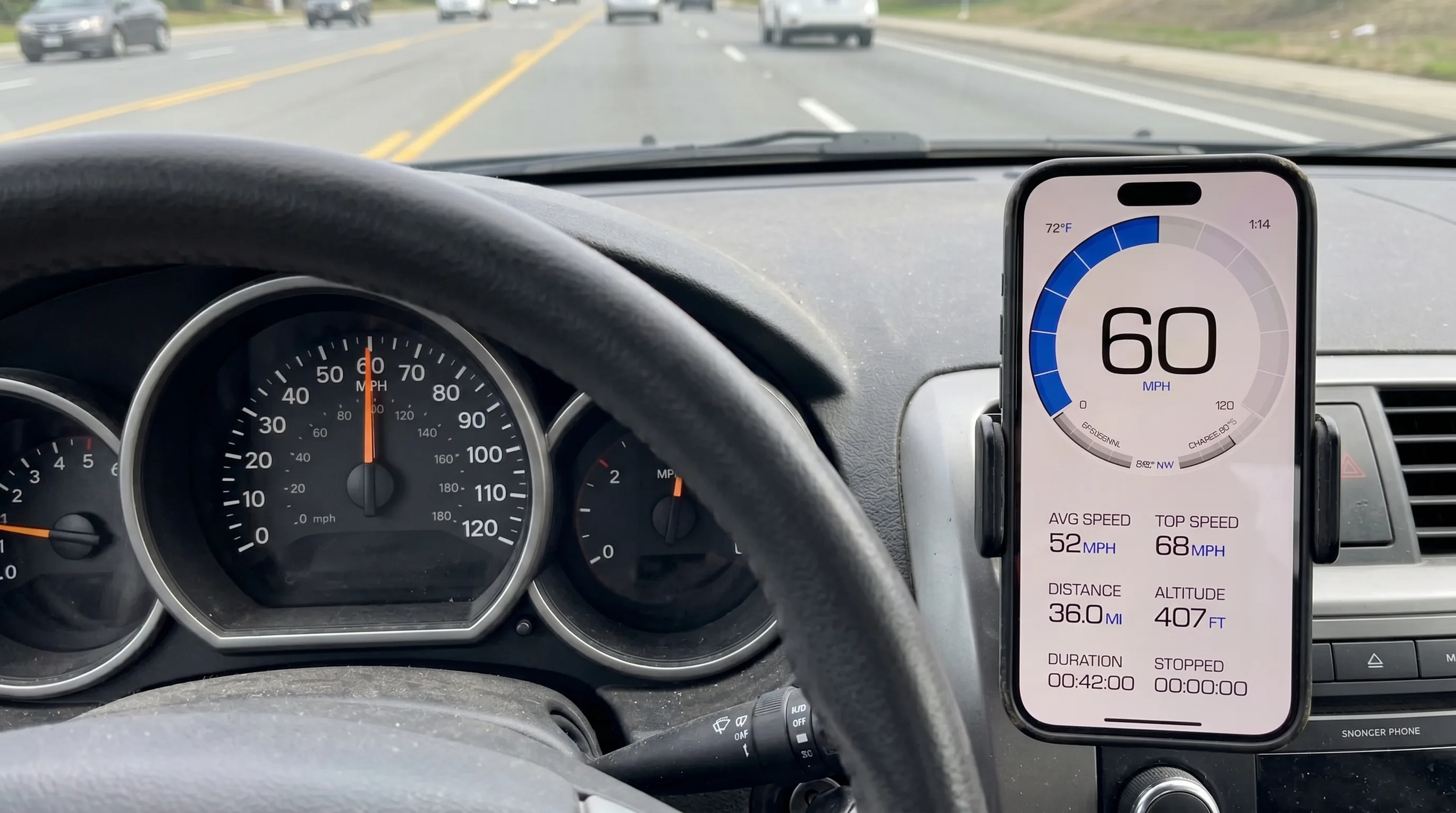
Why Put a GPS Speedometer in Your Car?
The gauge in your dashboard reads what the wheels do. GPS reads what the car actually does. Six features built specifically for driving.
GPS speed tracking
GPS speed does not use wheel rotation or a tire-size setting. It still depends on usable location data.
Big Digital Display
A dashboard-sized readout you can check at a glance, day or night — in MPH or KPH, digital numbers or a classic dial.
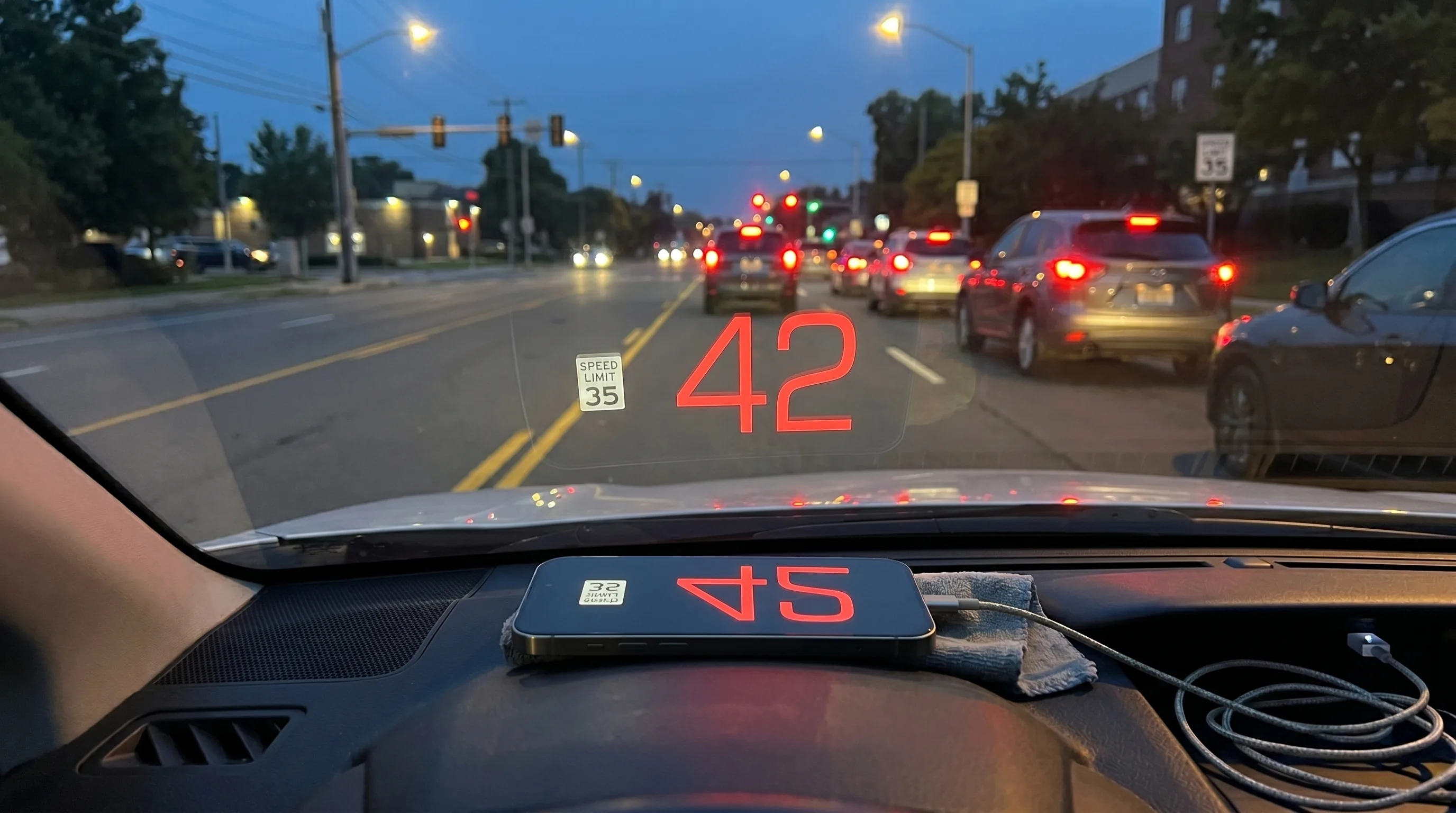
HUD Windshield Mode
Flip the display and reflect it off the windshield for a head-up view — read your speed without looking down.
Automatic Speed Limit Alerts
Road-limit display and manual controls require PRO. Automatic road-data lookup requires internet; a manually selected threshold is a separate setting. Automatic road-limit fallback uses road type and location. Displayed limits can be incomplete or inaccurate; follow posted signs. Offline road-limit packs are not available. A temporary in-memory value is not an offline road database.
Trip Recording
Recording, saving and basic viewing of trips are free. Detailed route playback and analysis require PRO. PRO unlocks route playback, speed and altitude charts, and detailed trip analysis. Trips saved while PRO stay unlocked if PRO later expires.
Works Offline
Core GPS speed tracking and trip recording work without internet, with location permission and a usable GPS signal. Automatic road-speed-limit data and weather need internet. Maps and other connected features may be unavailable offline.
GPS vs Your Dashboard Speedometer
Compare the GPS estimate and the vehicle display under steady, clear-sky conditions. A difference can come from either measurement; it does not by itself identify a fault or prove which instrument is correct.
Your Dash Gauge Over-Reads
Compare the GPS estimate and the vehicle display under steady, clear-sky conditions. A difference can come from either measurement; it does not by itself identify a fault or prove which instrument is correct.
GPS speed tracking
GPS speed does not use wheel rotation or a tire-size setting. It still depends on usable location data.
Test It Yourself
Compare the GPS estimate and the vehicle display under steady, clear-sky conditions. A difference can come from either measurement; it does not by itself identify a fault or prove which instrument is correct.
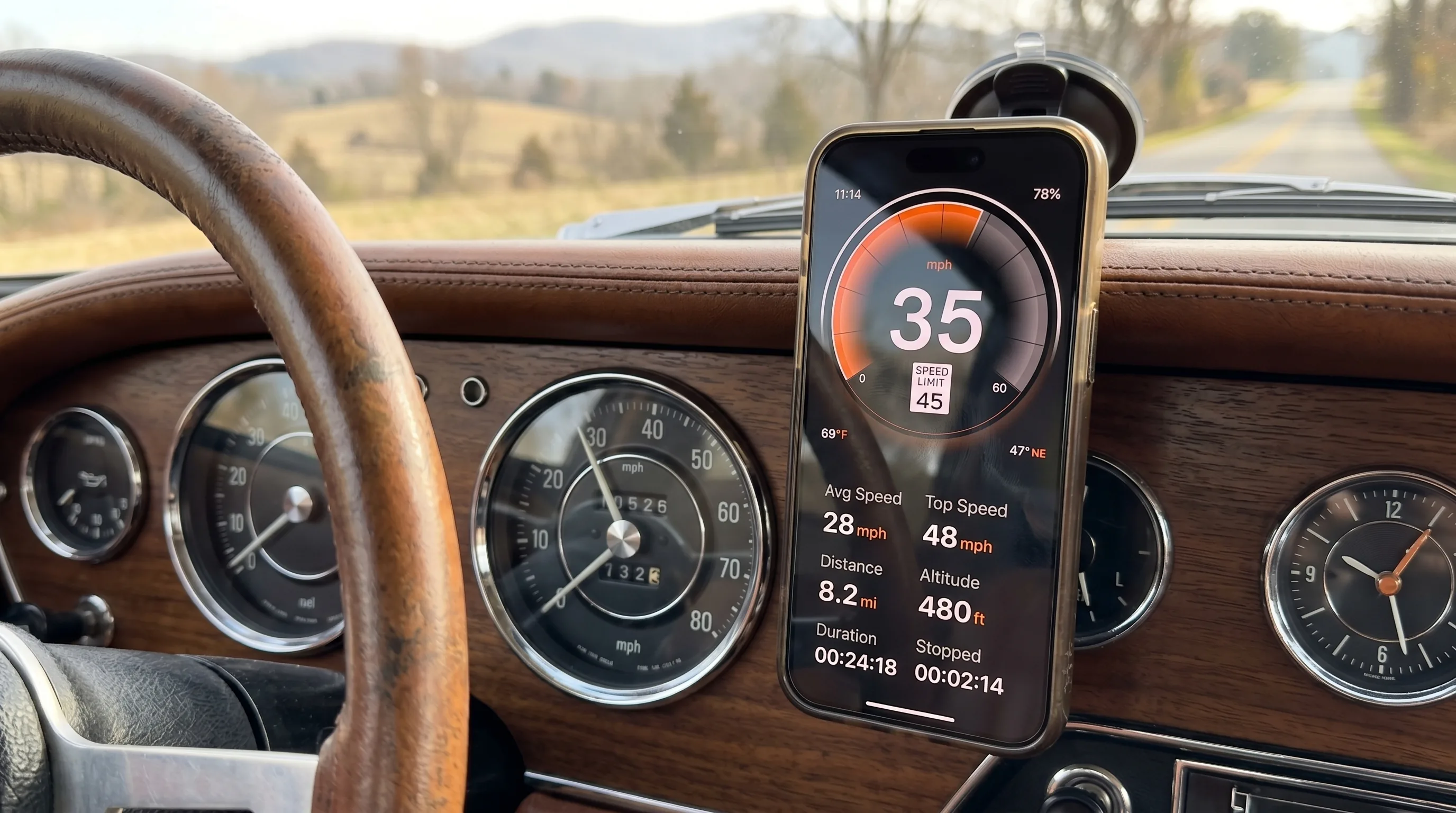
Built for the Ways Drivers Actually Use It
- Instrument cluster dead or display blank
- Faulty speed sensor or blown fuse
- Accurate speed while you schedule the repair
- Mount the phone in the cluster's sightline
- Vintage gauges drift, bounce, or quit entirely
- No cutting, no rewiring, nothing permanent
- Discreet mount keeps the original interior
- Accurate speed in a 60-year-old car
- Mirrored display reflects off the windshield
- Read your speed without looking down
- Works best at night
- Combines with speed limit alerts
- Towing speed limits are often lower
- Longer braking distances — watch speed closely
- Big display readable across a truck cab
- Average speed for long hauls
- Road-limit display and manual controls require PRO. Automatic road-data lookup requires internet; a manually selected threshold is a separate setting. Automatic road-limit fallback uses road type and location. Displayed limits can be incomplete or inaccurate; follow posted signs. Offline road-limit packs are not available. A temporary in-memory value is not an offline road database.
- Visual, voice, and haptic warnings
- Set your own alert tolerance
- Great in rentals and unfamiliar cars
Every Other Car You Drive
- Rentals and borrowed cars
- Motorcycles and scooters too
- One app, any vehicle
- No installation, no hardware
Set Up Your Car Speedometer in Two Minutes
Download the App
Free download from the App Store. Open it and grant location access — that's the only permission GPS speed needs.

Mount Your iPhone
Use a dashboard or windshield mount close to your eye line. Plug into a car charger for longer drives.
Pick Your Display
Big digital numbers or a classic dial, MPH or KPH. Enable HUD mode for night driving.
Drive
Your speed shows in real time. Turn on speed limit alerts and trip recording if you want them.
iPhone GPS vs Dashboard vs Aftermarket Gauge
| Feature | iPhone GPS Speedometer | Dashboard Speedometer | Aftermarket GPS Gauge |
|---|---|---|---|
| Cost | Free | Included with car | $40-300 |
| Accuracy | Depends on signal and conditions | Depends on signal and conditions | Depends on signal and conditions |
| Works with a broken cluster | |||
| HUD windshield mode | Rarely | ||
| Speed limit alerts | Some newer cars | ||
| Trip recording & GPX export | Rarely | ||
| Installation | None — mount the phone | — | Wiring or 12V socket |
| Switch MPH / KPH on demand | Fixed dial |
Our Recommendation: Use the app as a supplementary speed display while arranging a repair. It does not replace required vehicle equipment; check the rules that apply to your vehicle.
Car Speedometer FAQ
Compare the GPS estimate and the vehicle display under steady, clear-sky conditions. A difference can come from either measurement; it does not by itself identify a fault or prove which instrument is correct.
Compare the GPS estimate and the vehicle display under steady, clear-sky conditions. A difference can come from either measurement; it does not by itself identify a fault or prove which instrument is correct.
No — and we'd rather tell you that straight. GPS measures road speed, not engine revolutions. Reading RPM requires a connection to the engine, e.g. an OBD-II adapter. Note that in many languages "tachometer" simply means speedometer — if that's what you're after, the app fully covers it: it's a complete GPS speedometer for your car.
Use the app as a supplementary speed display while arranging a repair. It does not replace required vehicle equipment; check the rules that apply to your vehicle.
GPS needs a view of the sky, so expect brief dropouts in tunnels and covered garages. The app reacquires the signal within seconds of coming back into the open — on normal roads, coverage is continuous.
GPS speed does not use wheel rotation or a tire-size setting. It still depends on usable location data.
Free to download, with no ads. PRO is available through a subscription or a one-time purchase; both unlock the same PRO features. The price depends on your region and current offer; check Apple’s purchase screen. Recording, saving and basic viewing of trips are free. Detailed route playback and analysis require PRO. PRO unlocks route playback, speed and altitude charts, and detailed trip analysis. Trips saved while PRO stay unlocked if PRO later expires.
Battery use varies with the device, battery health, screen brightness, signal and enabled features. No fixed hourly drain or runtime has been established for the app. For long trips, plan a suitable charger or power bank. Core GPS speed tracking and trip recording work without internet, with location permission and a usable GPS signal. Automatic road-speed-limit data and weather need internet. Maps and other connected features may be unavailable offline.
Keep Reading
Online speedometer
Test GPS speed right now in your browser — nothing to install.
Speedometer calibration
Check how far off your dash gauge really is, step by step.
Broken speedometer replacement
What to do when the cluster dies — causes, costs, and the GPS stopgap.
Classic-car speedometer
Accurate speed in vintage cars without touching the original gauges.
HUD speedometer guide
Project your speed onto the windshield — setup and tips.
Speed limit app
Automatic speed limit detection and alerts on every road.
Free vs PRO
Exactly what's free and what the optional upgrade adds.
Put an Accurate Speedometer in Every Car
Free download with core speed tracking. The optional PRO upgrade unlocks speed limit alerts and advanced features.

Works in any car — broken gauge, classic, rental, or trailer in tow